

From Manual Tube Preparation to 2.5-Second Dispensing: What Has the Intelligent Blood Collection Tube Labeling Machine Changed?
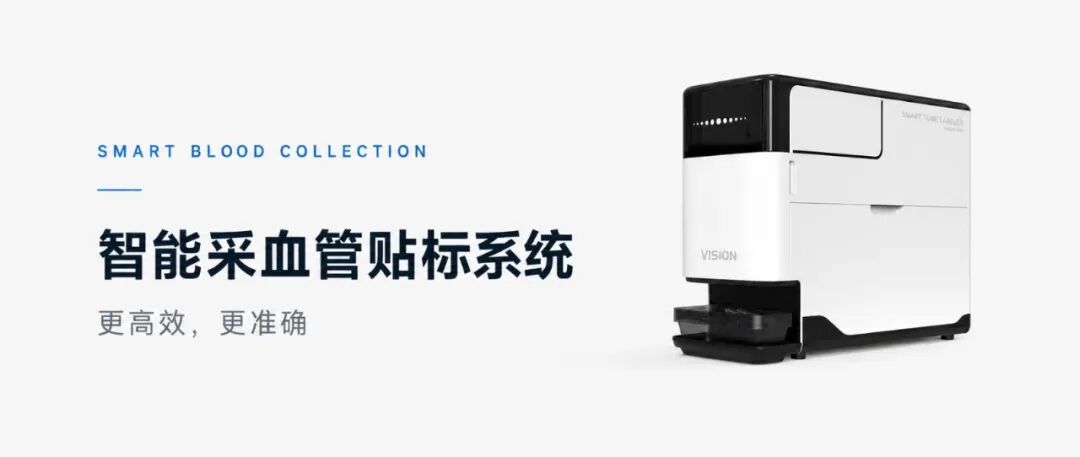
VISION TECHNOLOGY · INTELLIGENT BLOOD COLLECTION LABELING
How Can Automated Blood Collection Labeling Reduce Queue Times?
The root cause may go beyond staffing shortages
SECTION 01
Where Do the Bottlenecks Lie at the Phlebotomy Window
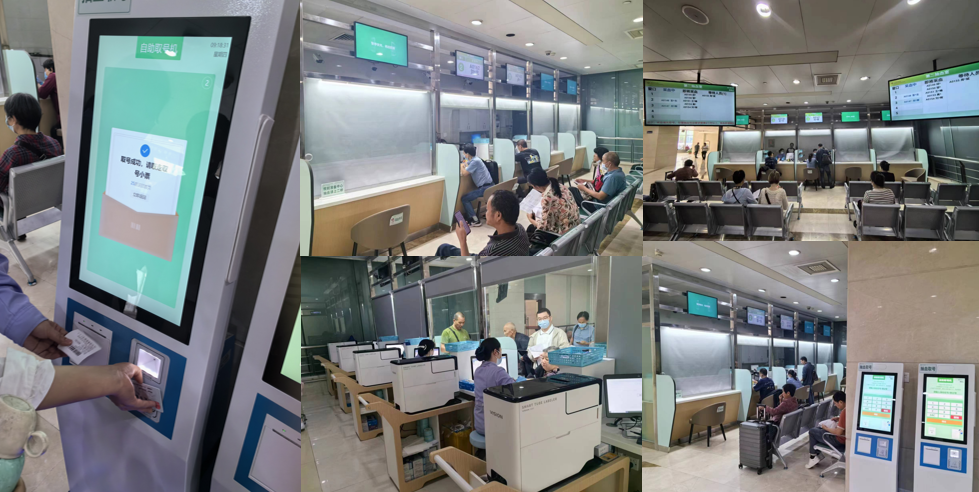
Morning hours — 8 to 9 AM — are the busiest at outpatient phlebotomy windows. Patients fill the waiting area, and the queue display keeps updating. Nurses must repeatedly verify patient information, confirm test items, select the correct blood collection tube types from multiple options, and print and apply labels. The actual blood draw takes only a few minutes, but the tedious preparatory work beforehand is far more time-consuming.
SECTION 02
Key Steps Nurses Must Complete Before Blood Collection
How many critical steps are involved?
01
Determine Tube Type and Quantity
Before the patient reaches the window, the nurse reviews the test requisition and selects the corresponding color-coded blood collection tubes (e.g., lavender-top tubes for CBC, blue-top tubes for coagulation, red/gold-top tubes for chemistry and immunoassay), determining the required quantity and types.
02
Retrieve Tube, Print Label, Verify, and Apply
Retrieve the tube, print the label, verify patient information, and apply the label — repeating for each tube.
SECTION 03
The Repetitive Nature of Manual Tube Preparation
Nurses must rapidly determine the tube color, quantity, and special requirements for each draw, repeatedly verifying information and applying labels. Any error necessitates re-collection, leading to patient dissatisfaction. After two consecutive hours of such operation, the drain on energy and attention exceeds that of the blood draw itself — this work is primarily execution-level physical labor.
SECTION 04
Delegate Tube Selection, Printing, and Labeling to Automation
The automated blood collection labeling machine consolidates tube selection, label printing, verification, label application, and tube dispensing into one continuous process.
01
Scan-to-Dispense: Integrated Workflow
After scanning the patient's barcode, the system automatically matches tube types and quantities, simultaneously printing and applying labels. The nurse simply verifies and confirms. Previously scattered steps — tube retrieval and labeling — are now integrated into a continuous operation, allowing nurses to focus on the patient.
✓ Scan to read test orders automatically
✓ Auto-match tube type & quantity
✓ Automated label printing & application
✓ Nurse verifies and proceeds to draw
02
2.5-Second Dispensing with Non-Stop Refilling
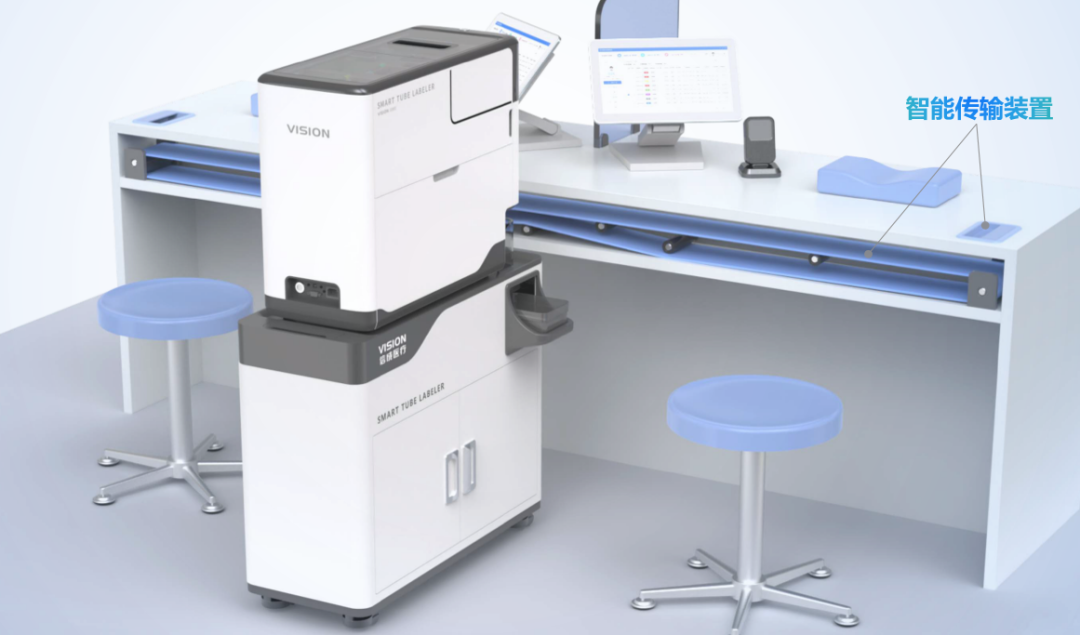
Vision Technology's automated blood collection labeling machine features precision edge-detection design, dispensing tubes in as fast as 2.5 seconds. During peak hours, saving over ten seconds per tube can cumulatively reduce queue times by more than 30 minutes, improving window throughput. The equipment supports tube replenishment without stopping, preventing queue buildup caused by downtime during peak periods.
2.5s
Fastest dispensing speed
Non-Stop
Refill during operation
HIS/LIS
Seamless system integration
Equipment Connectivity with Hospital Information Systems
SECTION 05
The Equipment Must Interface with Hospital Information Systems
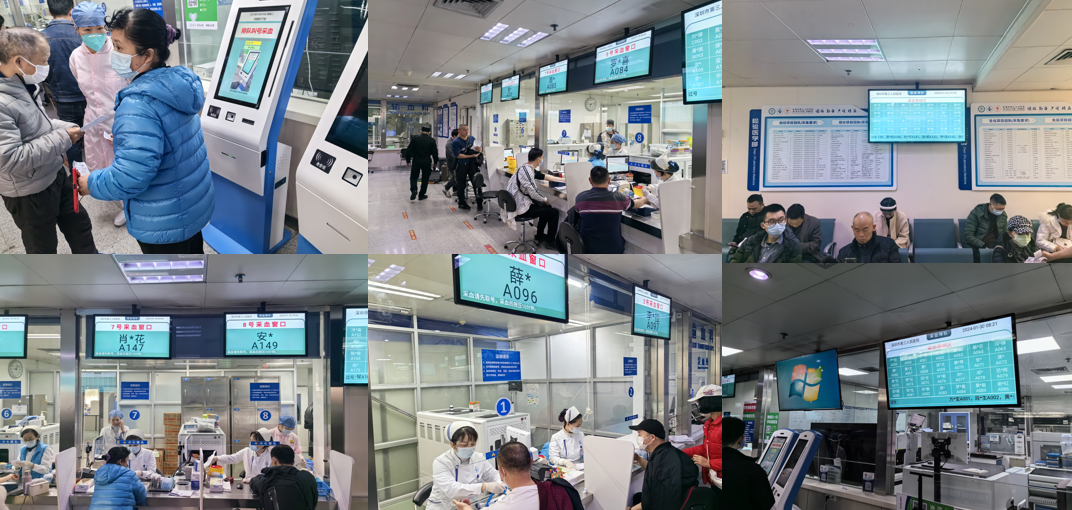
If the equipment can only mechanically apply labels without connecting to hospital systems, it remains a standalone tool that cannot truly integrate into the blood collection workflow.
Vision Technology's automated blood collection labeling machine interfaces with HIS and LIS systems. After scanning, it directly retrieves patient and test information without manual entry or secondary verification. It also integrates with queue management systems, synchronizing the call sequence with tube preparation.
While the patient is still in the waiting area, information is already transmitted to the device to begin tube preparation. When called, the nurse picks up the pre-labeled tube, verifies it, and proceeds directly. Information flows between systems, eliminating the need for repeated confirmations at the window.
✓ HIS/LIS system integration
✓ Barcode scan for direct data retrieval
✓ Queue management system interface
✓ Automated data flow, no manual entry
SECTION 06
Different Hospitals, Different Requirements — The Equipment Must Adapt
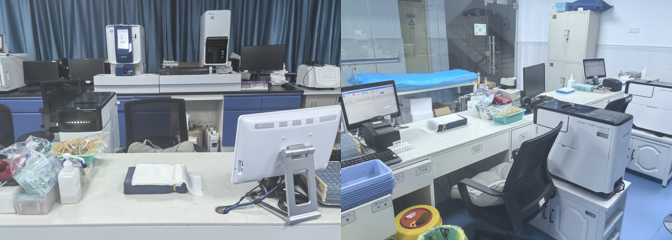
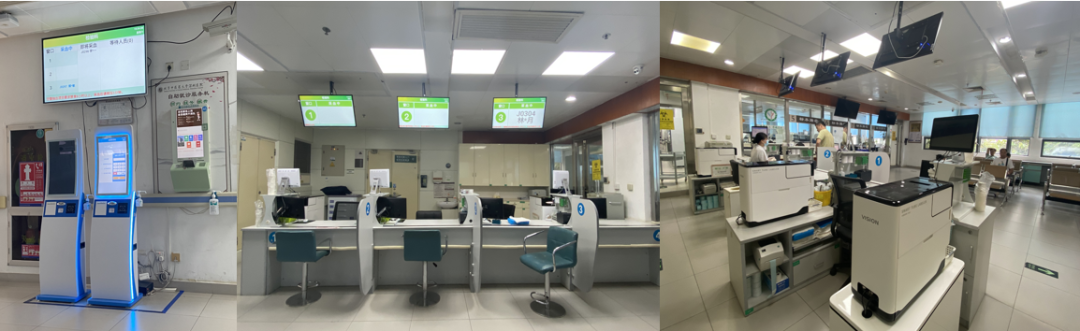
Each hospital's phlebotomy window space, daily blood collection volume, preferred tube brands and specifications, and HIS/LIS interface standards vary. A standard off-the-shelf device may not directly fit all scenarios.
Some windows have narrow countertops with limited equipment depth; some high-volume hospitals require larger tube storage capacity; some complex test panels demand specialized tube selection logic. These differences must be addressed during the equipment design phase.
For medical device brands, smart hospital solution providers, system integrators, and IVD companies, equipment that can be customized and developed to project requirements is typically easier to deploy than standard products.
SECTION 07
Vision Technology OEM/ODM Service Offerings
Covering the full project lifecycle for intelligent blood collection labeling equipment — from design to mass production.
✓ Product Appearance & Structural Design
✓ Tube Storage Structure & Capacity Customization
✓ Scanning, Printing & Labeling Module Integration
✓ HIS/LIS Interface Adaptation
✓ Queue Management System Integration
✓ Sheet Metal & Plastic Component Manufacturing
✓ Electronic Module Integration & Final Assembly
✓ Prototype Development to Mass Production
Different projects require different levels of customization. Some clients only need to adjust appearance and branding, others require a complete redesign of internal structure and software logic, and some need system integration with existing product lines. We communicate specific technical requirements and delivery milestones with clients during the early project phase.
SECTION 08
The Equipment's Role at the Phlebotomy Window
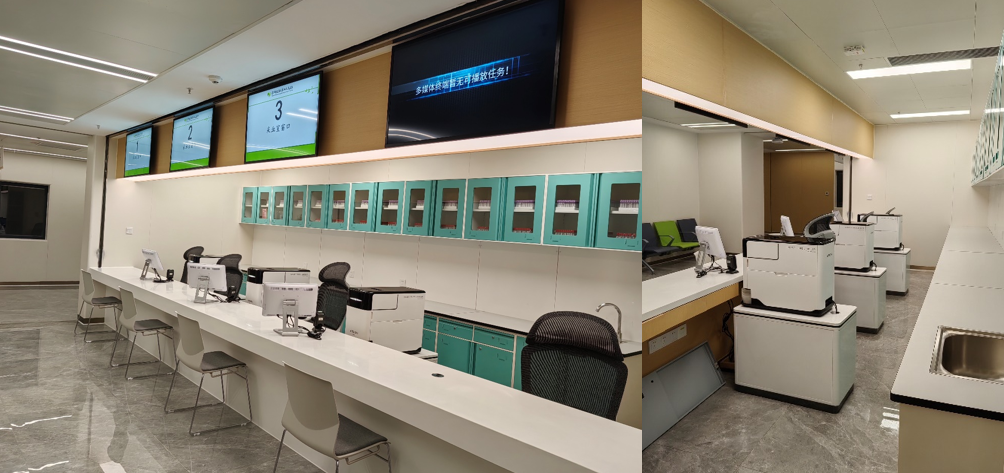
Introducing automation at the phlebotomy window is not about reducing nursing staff or replacing humans with machines. Tube selection, label printing, and label application are highly standardized, repetitive tasks better suited for automated equipment. Nurses can then devote their time to tasks requiring experience and judgment: verifying patient identity, assessing vein conditions, managing patient anxiety, and handling emergencies.
For patients, shorter wait times are the most direct benefit. For window staff, a more stable work pace without constantly shifting attention during tube preparation. Both improvements depend on the equipment performing reliably in real-world operation — not on a list of features on paper.
SECTION 09
Hospital Case Studies
From project adaptation to real-world deployment — our equipment and solutions are already serving multiple hospitals.
Selected hospital case studies (in no particular order)
Guangdong Provincial Second TCM Hospital
Guangdong Provincial TCM Hospital, Zhuhai Branch
The First Dongguan Affiliated Hospital of Guangdong Medical University
Shenzhen Third People's Hospital
Shenzhen Longgang District Fourth People's Hospital
Shenzhen Longgang District Second People's Hospital
Shenzhen Longhua District People's Hospital
Shenzhen People's Hospital
Futian District Women & Children's Hospital
PLA General Hospital, Hainan Branch
PLA Joint Logistic Support Force No. 928 Hospital
Hunan Cancer Hospital
Xiangya Hospital, Central South University
Second Affiliated Hospital of Nanchang University
Second Affiliated Hospital of Army Medical University
Xiushui County First People's Hospital
Case studies are continuously updated
PROJECT COOPERATION
Project Cooperation Inquiry
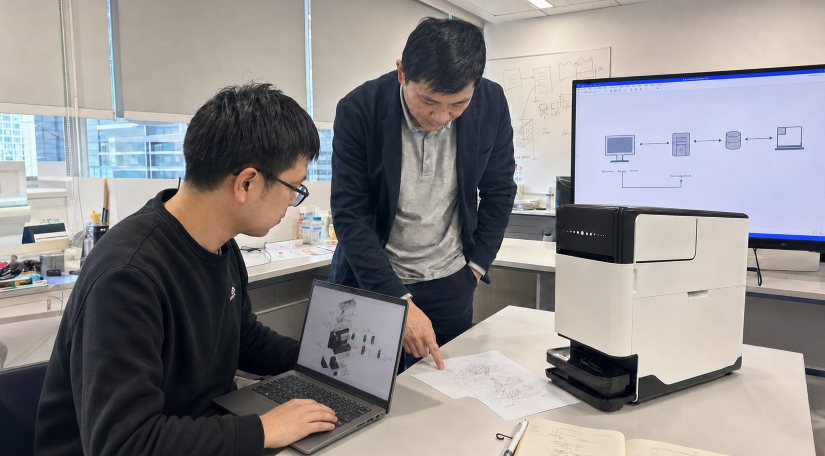
If your team is developing or planning intelligent blood collection labeling equipment, blood collection management systems, or smart laboratory department products — including appearance and structural design, functional module integration, HIS/LIS interface adaptation, prototyping, or mass production — please contact Vision Technology to discuss your project requirements.
Dongguan VisionTechnology Co., Ltd. ("Vision Technology") provides intelligent blood collection labeling equipment and OEM/ODM development and manufacturing services for laboratory departments, outpatient and emergency departments, physical examination centers, and ward settings. Starting from clinical workflows and on-site conditions, we combine structural design, sheet metal and plastic manufacturing, electronic integration, final assembly, and testing verification to help clients transform product plans into deployable, mass-producible equipment.
For product documentation, custom solution assessment, or project coordination, please contact Vision Technology for further discussion.
VISION TECHNOLOGY
OEM/ODM Solution Provider for Intelligent Blood Collection Labeling Equipment
Automated Blood Collection Labeling Machine · HIS/LIS Integration · Structural Customization · Mass Production
Submit a request
Your name*
Mail*
Company Name*
phone
message*
File/Image Upload
Note:Up to 6 files, each within 10MVerification code