Why lighter tablet carts are harder to engineer
2026-10-21 14:38
2
ENGINEERING INSIGHTS

Why lighter tablet carts are harder to engineer

Balancing weight, stiffness, and vibration in medical cart design
Tablet cart in a clinical setting
A lighter cart sounds like an obvious improvement: less effort, easier handling, and something one person can move comfortably. In daily use, the picture is more complicated.
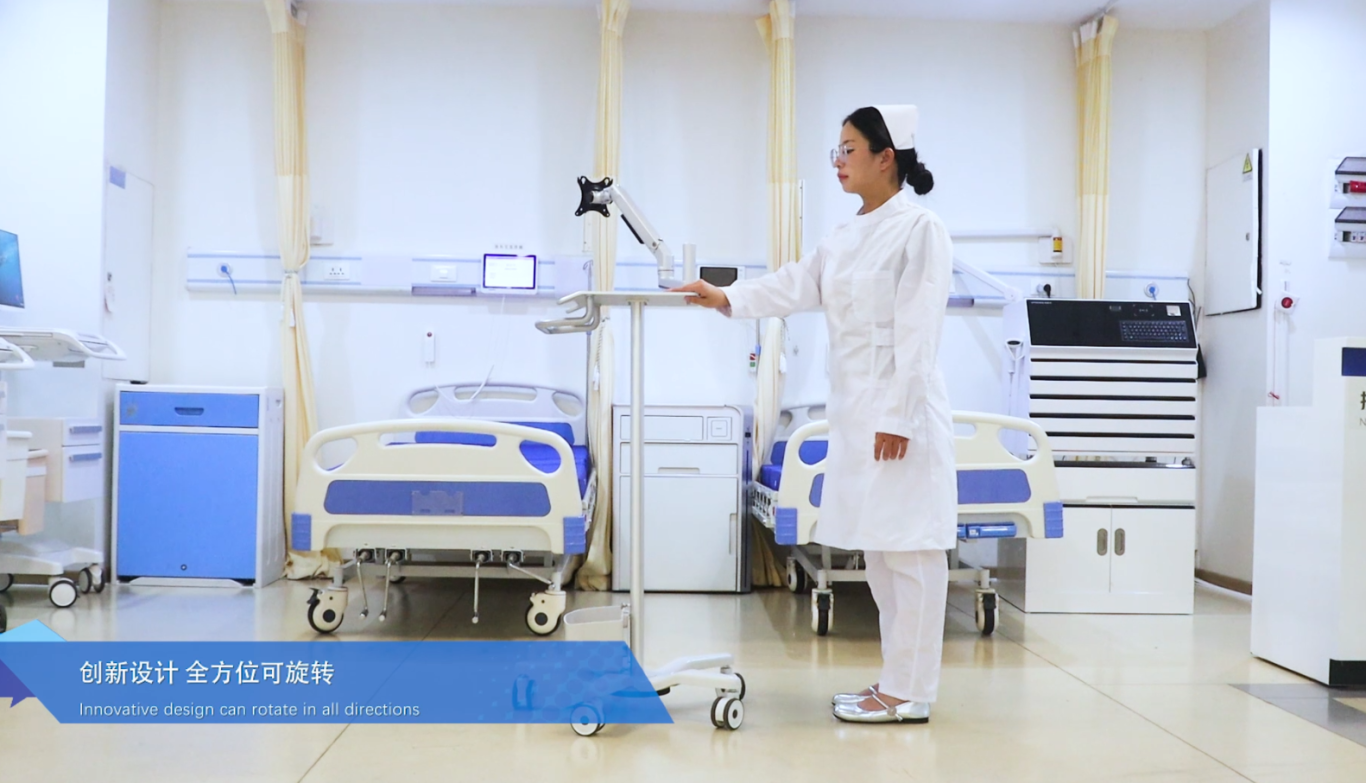
Reduce the weight and the cart may feel less planted. It can shake as it crosses a threshold, with the screen moving along with it. At the bedside, where nurses stop the cart, remove the tablet, and adjust the viewing angle, those small movements quickly become a usability issue.
Mobile rounds, nursing documentation, and bedside access to patient information all benefit from a lighter cart. But changing materials or thinning the walls is only a starting point. Every kilogram removed changes the balance between stiffness, vibration, mobility, and cost.
Weight, stiffness, stability, and cost have to be engineered together.
There are three main ways to reduce weight: change materials, reduce cross sections, or use fewer parts.
• Lighter materials: Elastic modulus and strength characteristics change with the material.
• Thinner sections: Resistance to bending and twisting can fall significantly.
• Fewer parts: There may be less flexibility to compensate for assembly tolerances.

Vision Technology 

What our projects have taught us

With more than 10 years in medical devices and over 200 custom projects, we keep coming back to the same point: reducing weight is only part of the job; restoring stiffness and stability is the real challenge. Our 22,000 m² manufacturing facility covers four core manufacturing processes. Rapid prototyping in 3–7 days allows us to compare multiple design options efficiently at the prototype stage.
01 / FREQUENCY & VIBRATION

Natural frequency and the risk of resonance

A moving cart encounters tile joints, thresholds, carpet edges, and changes in floor level. A lighter structure may respond more strongly to the same excitation. If its natural frequency shifts down toward the frequencies generated during everyday use, the risk of resonance increases.
Vibration can travel into the equipment and display, making the screen harder to read and affecting mounting stability. It can also reach drawer slides and latches, accelerating wear and allowing play to develop.
Design priority: Address damping and joint restraint as part of the weight reduction process. Pay particular attention to the column-to-base joint, equipment mounting interfaces, and drawer slides. Simply reducing wall thickness can leave the cart more vulnerable to vibration.
02 / COLUMN MECHANICS

Bending stiffness and torsional stiffness
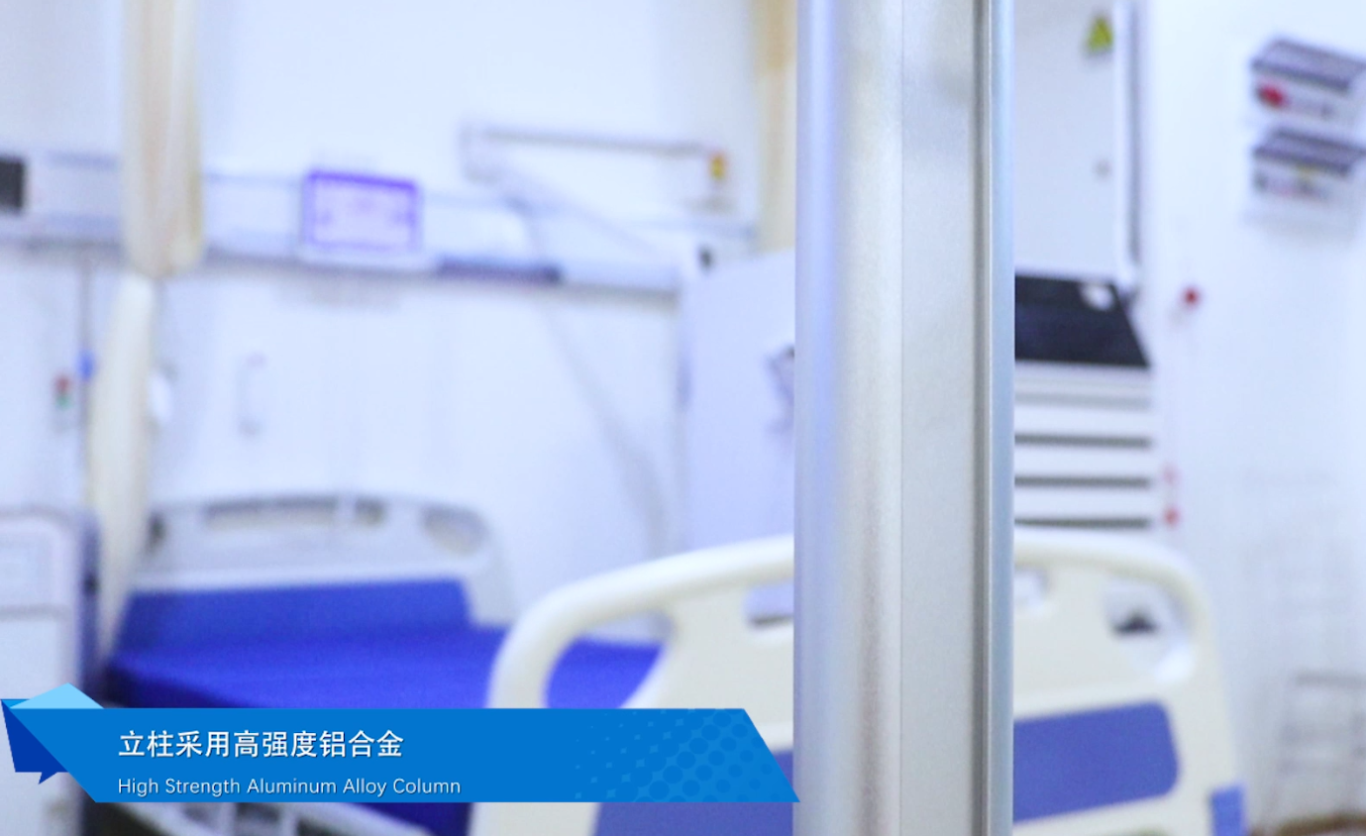
Loads and structural design of a medical cart column
Tablet cart columns are typically tall and slender. During movement, forces pass through the column between the base and the upper assembly. Turning introduces torsion, while equipment mounted to one side creates an eccentric bending moment. Bending stiffness depends on the second moment of area; torsional performance depends strongly on whether the cross section is open or closed.
Square and round tubes are examples of closed sections, which resist twisting far more efficiently than open sections such as bent profiles. Replacing a closed section with an open one to save weight can substantially reduce torsional stiffness. The result may be noticeable movement in the upper assembly when the cart turns or takes a sideways load.
03 / CASTERS & STABILITY

Why a lighter cart can feel less planted
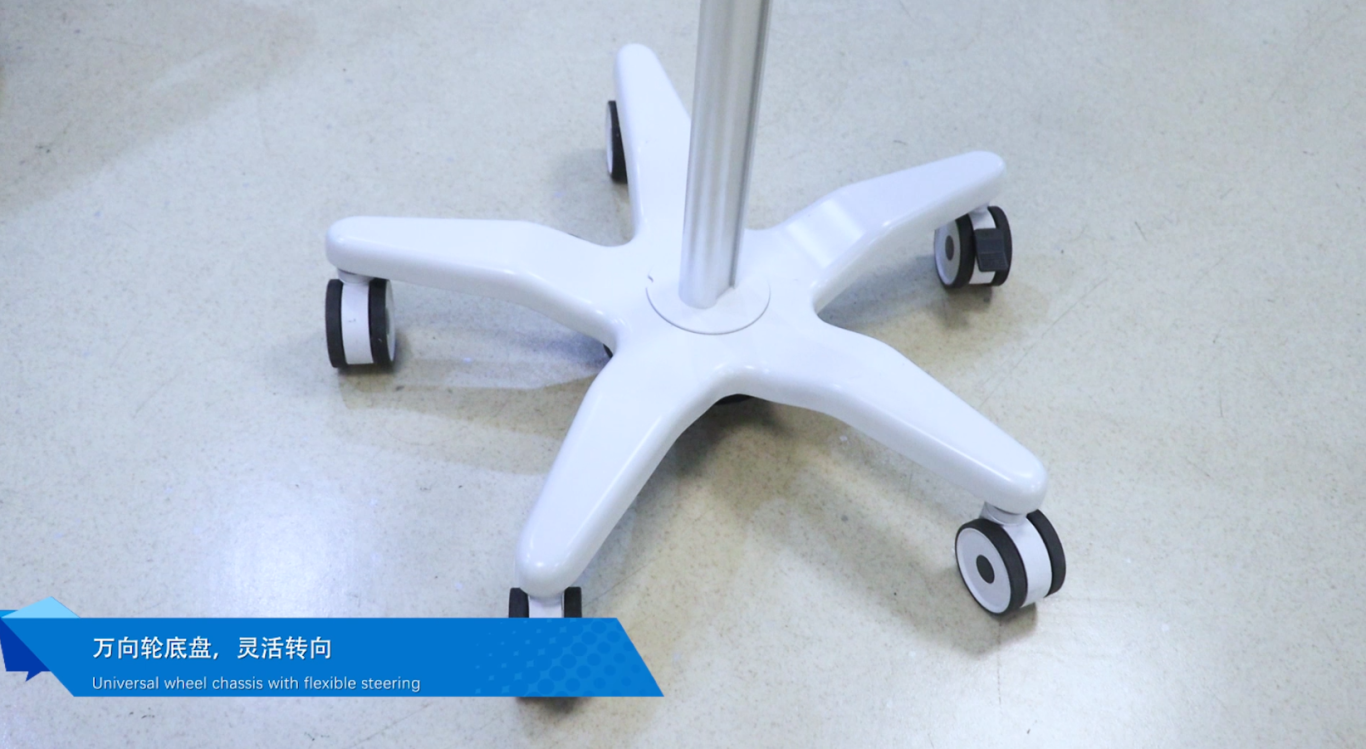
Caster contact and base stability
Caster traction depends on the normal force at the floor. As cart weight falls, so does the load on the wheels. On uneven surfaces, the casters may lose consistent contact, making the cart feel unsettled, bounce over thresholds, or become harder to steer on carpet.
The upper components are often harder to make lighter, so reducing weight elsewhere can leave the cart with a higher center of gravity. A light structure with a high center of gravity is a poor combination for stability. Start by defining the route: floor types, thresholds, cable covers, and aisle widths. Then select the caster diameter and braking arrangement to suit.
04 / DYNAMIC LOADS

Look beyond the static load rating

Dynamic load testing for medical carts
Published load ratings are typically measured with a stationary, evenly distributed load. Actual use involves inertial forces during starts and stops, impacts at thresholds, off-center loads when items are removed from one side, and fatigue over repeated use.
For procurement teams: Reducing weight can reduce the structural safety margin. For heavier equipment, such as ultrasound systems or endoscopy processors, structural reliability should take priority over further weight savings.
05 / COST & FINISH

Thin walls bring manufacturing trade-offs

A lighter design is not necessarily a cheaper one. Replacing steel with aluminum alloys or adding damping components can increase cost. Thinner walls use less material, but they can also create problems with fit and finish:
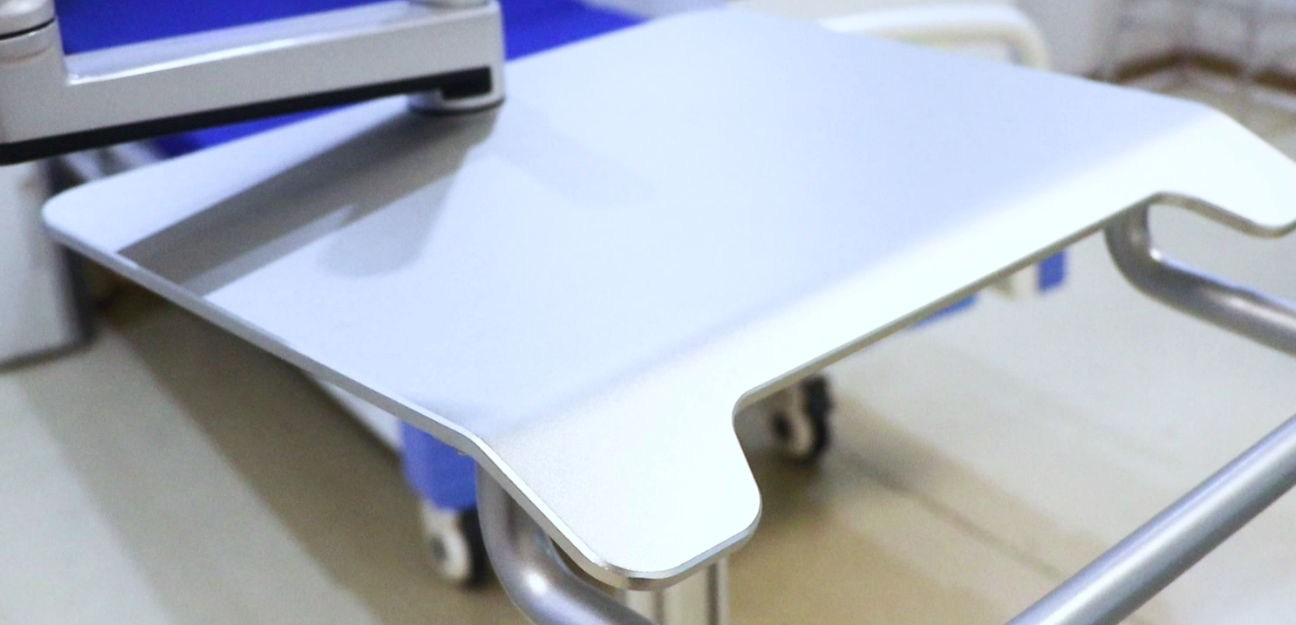
• Distortion control: Shrinkage and warpage during injection molding, or distortion during sheet metal bending and welding, can create uneven assembly gaps.
• Coating consistency: Coating thickness can vary at edges and corners. Dimensional variation can also lead to misalignment between parts.
Thin-wall components and surface finishing
06 / PRODUCT EXAMPLES

Three cart designs, three sets of priorities

These three Vision Technology carts are configured for different workflows and user needs.

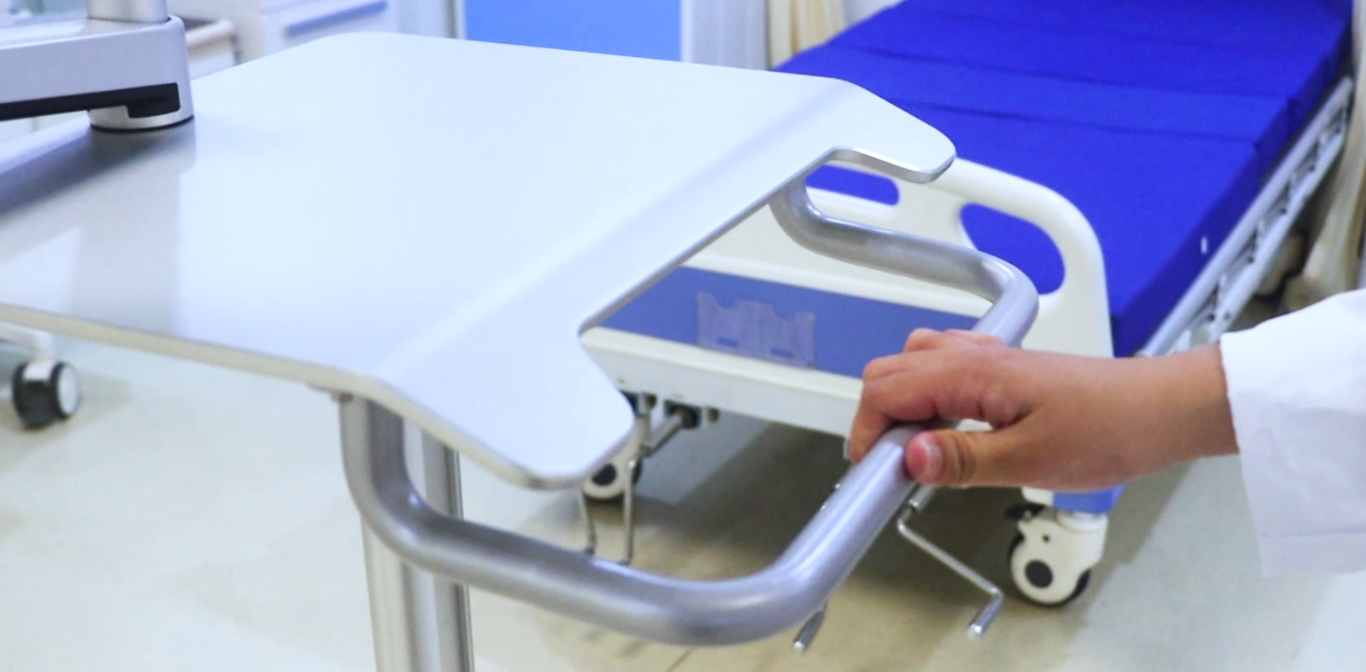
Design 1: Two-section support arm and large aluminum worktop
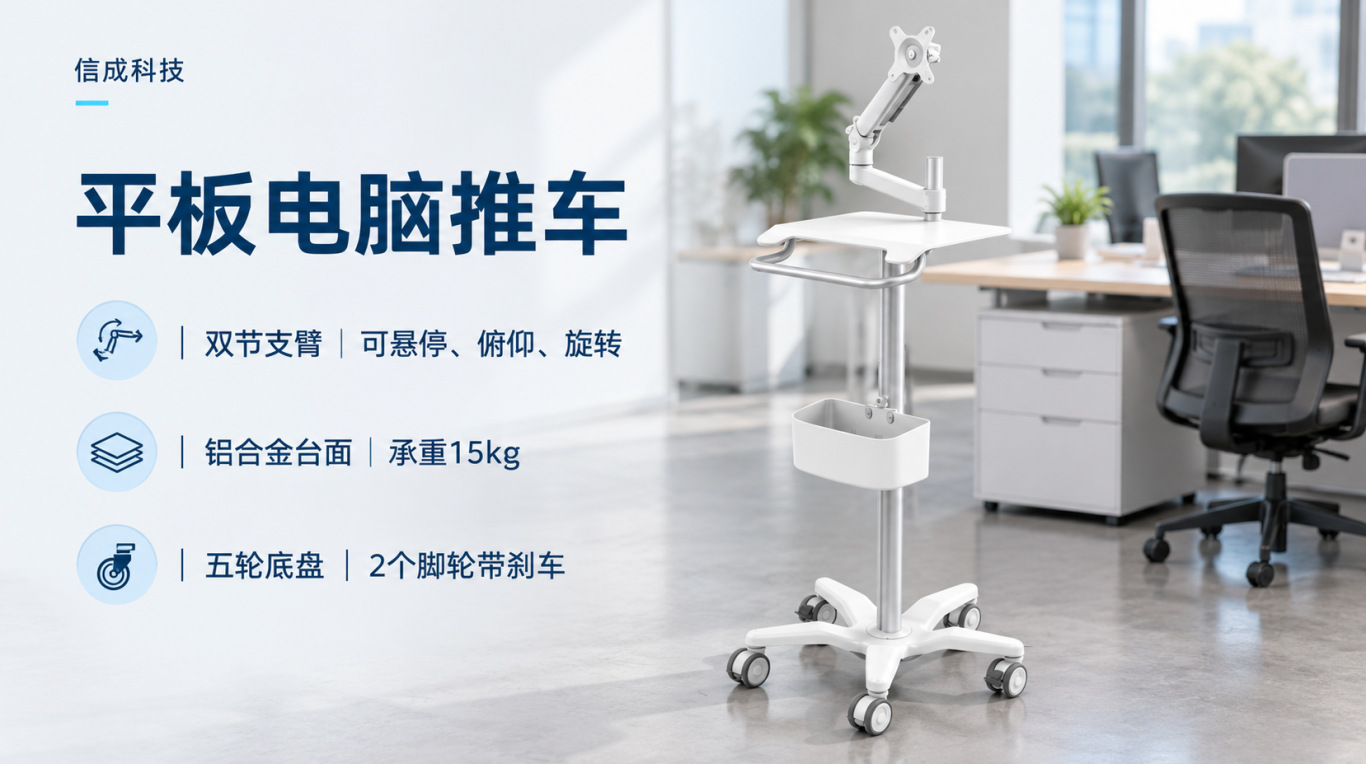
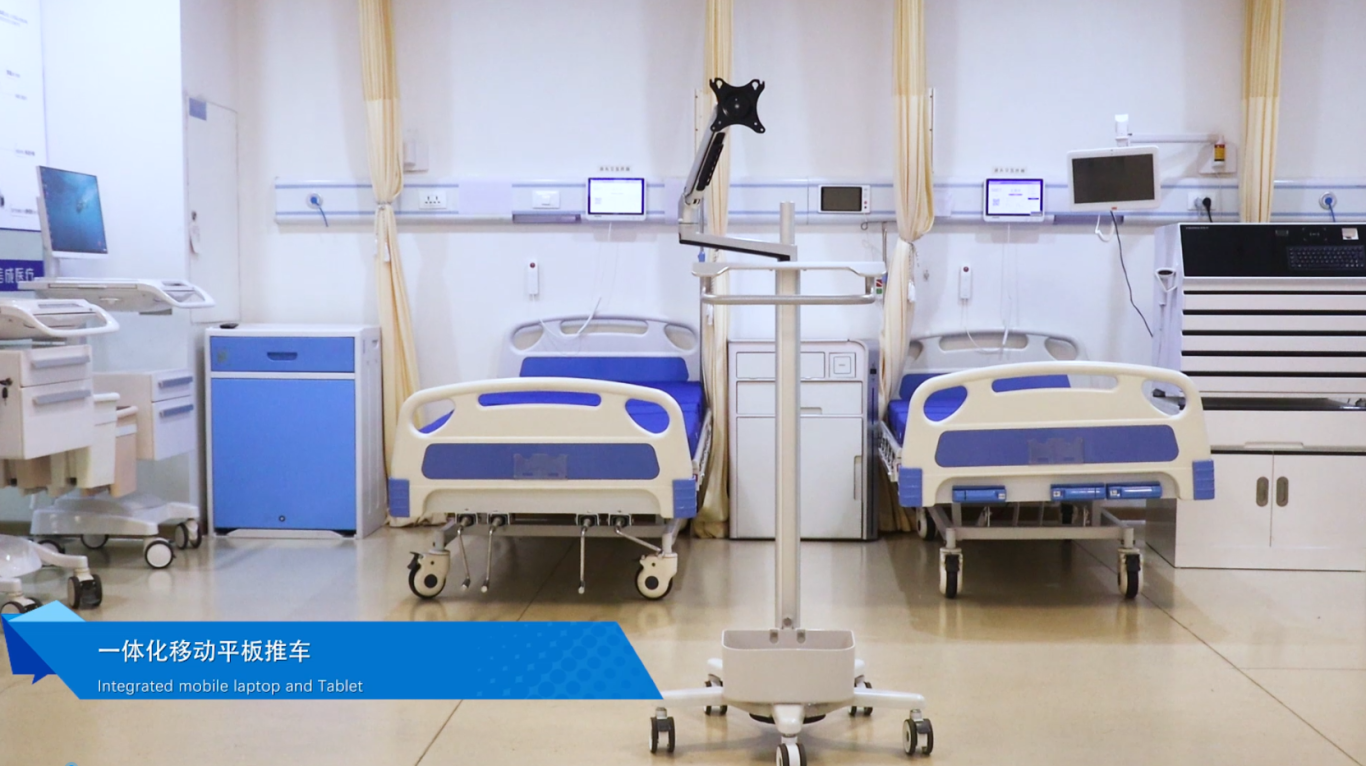
Tablet cart with a two-section arm and large aluminum worktop

• Flexible positioning: A 600 mm, two-section aluminum arm holds the screen in position and allows tilt and rotation. Load capacity: 1–5 kg.
• Worktop and storage: The 405 × 300 mm aluminum worktop supports up to 15 kg. A large storage box keeps equipment and everyday items organized.
• Mobility and height options: A stainless steel handle and five 3-inch casters, including two with brakes. Available in fixed-height, manual-adjustment, or pneumatic-adjustment versions.

Design 2: Dedicated tablet cart with adjustable basket and accessory options
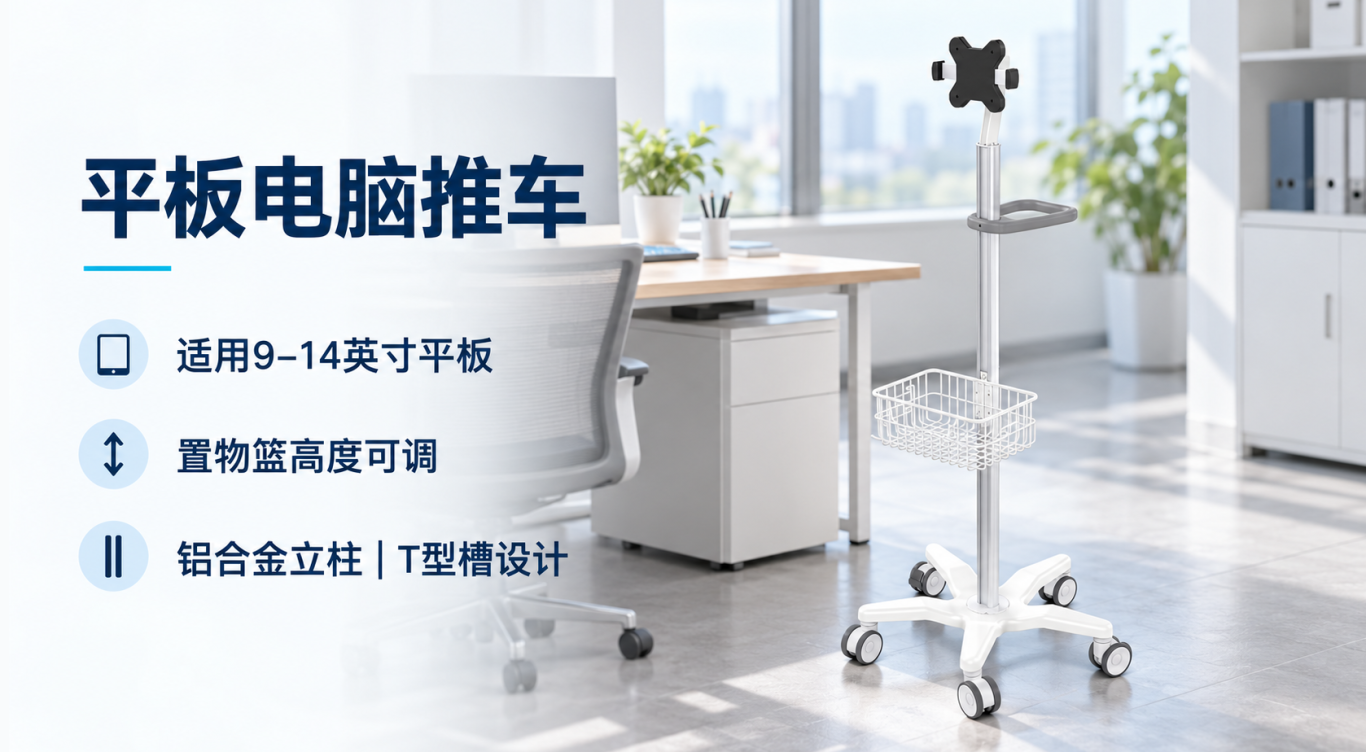
Dedicated tablet cart with an adjustable storage basket

• Built for tablets: An adjustable holder fits 9–14-inch tablets. A one-piece, injection-molded ABS handle makes it easy to move between workstations.
• Practical storage: A 323 × 202 × 127 mm adjustable basket, plus an SPCC sheet steel enclosure for the power adapter.
• Accessory mounting: T-slots in the aluminum column provide attachment points for accessories. A die-cast aluminum base and quiet-rolling casters complete the platform.

Design 3: Compact worktop and adjustable monitor arm
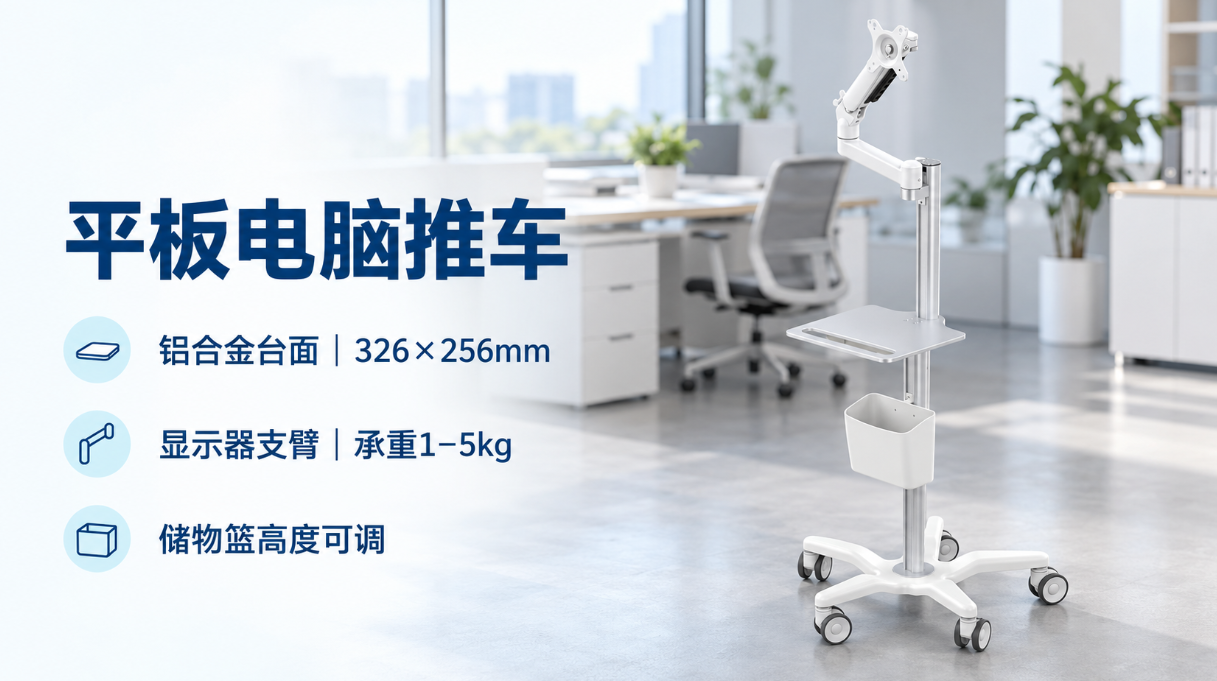
Compact cart with an adjustable monitor arm

• Compact footprint: A 326 × 256 mm aluminum worktop at approximately 850 mm high suits workflows that need a smaller work surface.
• Adjustable viewing angle: A 600 mm aluminum monitor arm holds position and allows tilt and rotation. Load capacity: 1–5 kg.
• Storage and mobility: A 210 × 100 × 180 mm adjustable basket, T-slot column, die-cast aluminum base, and 3-inch quiet-rolling casters.
Across all three designs, weight is one consideration among many. Adjustment, storage, handling, and parking each come with their own trade-offs.
07 / APPLICATIONS

Where lower weight matters most

Medical cart used during mobile clinical rounds
1. Bedside documentation: Nurses repeatedly stop the cart, remove and replace the tablet, and adjust its angle. Cart weight affects the effort required for every start and stop.
2. Frequent movement through clinics and corridors: Rolling resistance and steering response affect workflow efficiency. Overall width and turning radius are key considerations.
3. Narrow aisles: The cart must fit within tight clearance limits.
4. Elevator transfers: A lighter cart is easier for one person to handle when crossing elevator gaps, but caster performance and braking become especially important.
DESIGN STRATEGIES

Weight reduction: benefits and trade-offs

ApproachBenefitTrade-offBest suited to
Use lighter materials, such as aluminum Significant weight savings; a more refined look and feel Higher material cost; joining methods need validation Mid-range and premium products where appearance and feel matter
Reduce wall thickness or optimize cross sections Potential savings in both weight and material cost Lower bending and torsional stiffness; greater distortion risk Light loads and smooth travel routes
Use closed-section columns Efficient torsional stiffness, allowing thinner walls More complex forming and higher cost Carts that need responsive handling when turning
Use smaller or simpler casters Lower overall cart height and weight Less ability to cross obstacles; smoother floors required Areas with level floors and no thresholds
Add damping and restraint components Reduced vibration and noise A small increase in weight and assembly work Carts carrying displays or precision equipment

Design around the workflow

Start with the setting, the user, and the problem the cart needs to solve. That tells you where weight can be removed and where stiffness and stability need to be retained. A lighter cart is the result of those decisions.
Vision Technology
End-to-end medical equipment OEM/ODM manufacturing
Medical carts · Ergonomic support arms

Vision Technology medical cart and OEM/ODM manufacturing overview
Name:
Message:
Verification code:
Submit
Comment