

Why an EEG Cart Should Do More Than Just Hold Equipment
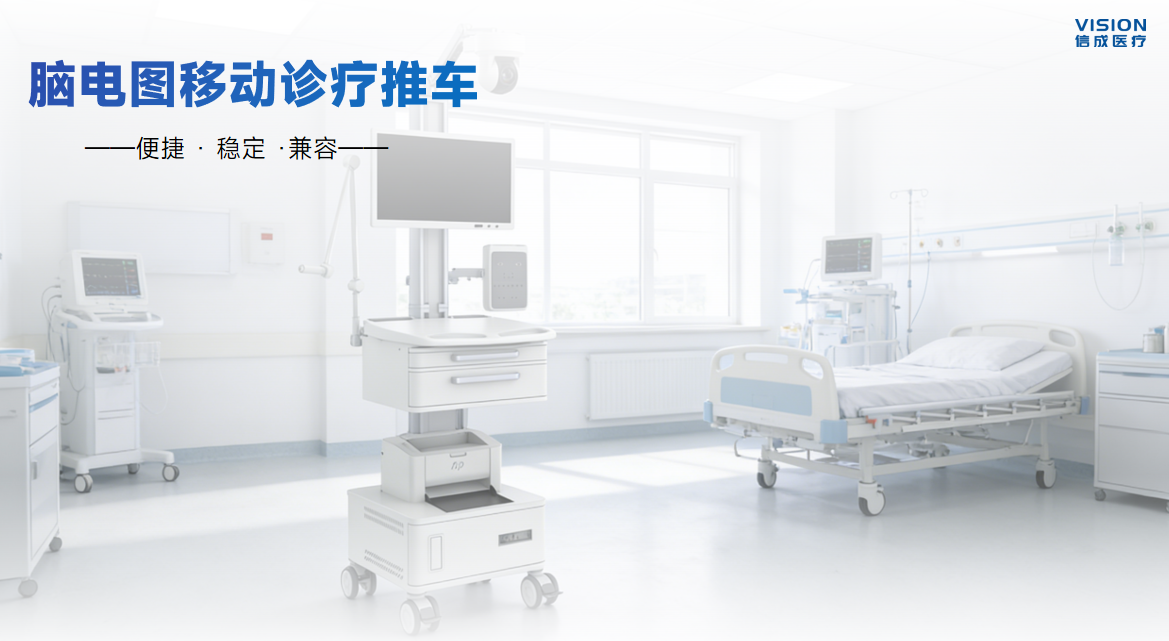
Why an EEG Cart Should Do More Than Just Hold Equipment
How proper cart design improves workflow, space utilization, cable management, and system reliability in EEG environments.
Looking Beyond the EEG System Itself
When hospitals invest in EEG systems, most attention is naturally focused on the diagnostic equipment itself. However, one critical factor is often overlooked: how the system is actually deployed and used in daily clinical practice.
An EEG cart is far more than a platform for mounting equipment. It directly influences workflow efficiency, space utilization, cable organization, equipment stability, and overall user experience.
Through our collaboration with hospitals and medical device manufacturers, we frequently see generic medical carts creating unnecessary challenges in EEG applications.
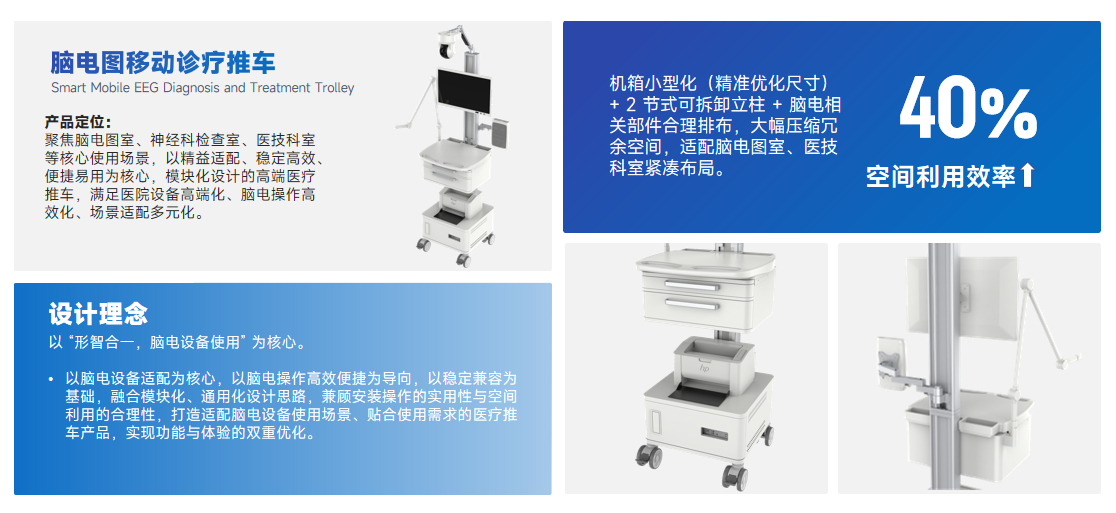
Common Challenges with Traditional EEG Cart Solutions
1. Equipment Fits, But Space Is Wasted
Many EEG systems are installed on general-purpose medical carts. While functional, these solutions often rely on external host mounting, exposed cabling, bulky structures, and oversized footprints.
In neurology departments, EEG laboratories, and diagnostic rooms where space is already limited, inefficient cart design can negatively impact room organization and staff movement.
2. Cable Management Becomes a Daily Frustration
EEG systems inherently involve numerous cables, electrodes, and connection points. Without proper routing and organization, users frequently encounter tangled wires, difficult maintenance access, and inefficient workflows.
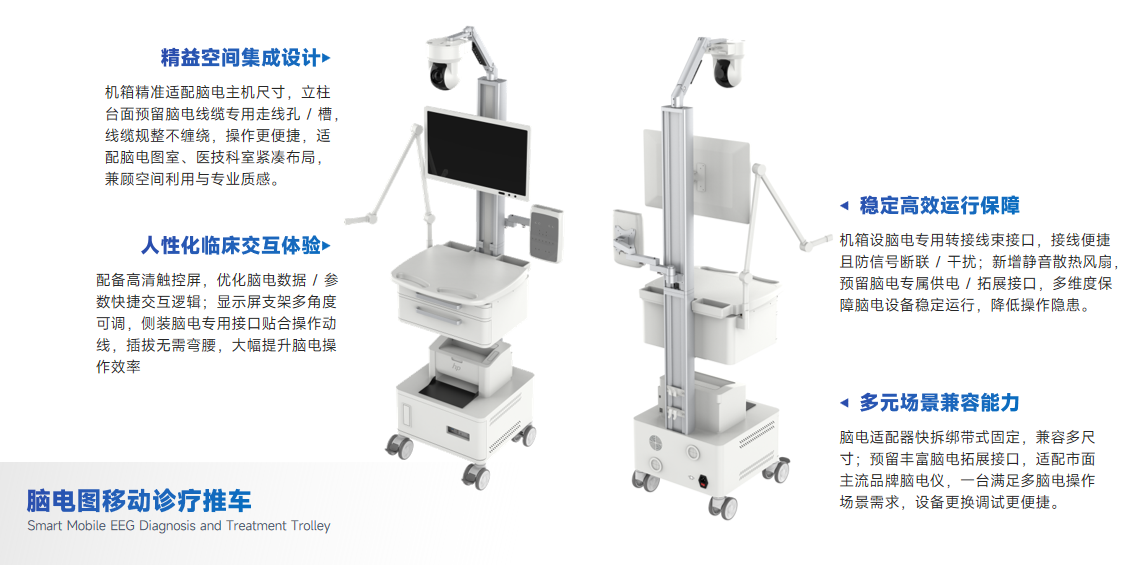
3. Reliability Requirements Are Increasing
EEG examinations demand highly stable signal transmission and data acquisition. Poorly designed carts may contribute to loose connections, insufficient ventilation, signal interference, and overheating during extended operation.
The Vision MedTech EEG Mobile Workstation
Designed to integrate seamlessly into real clinical workflows.
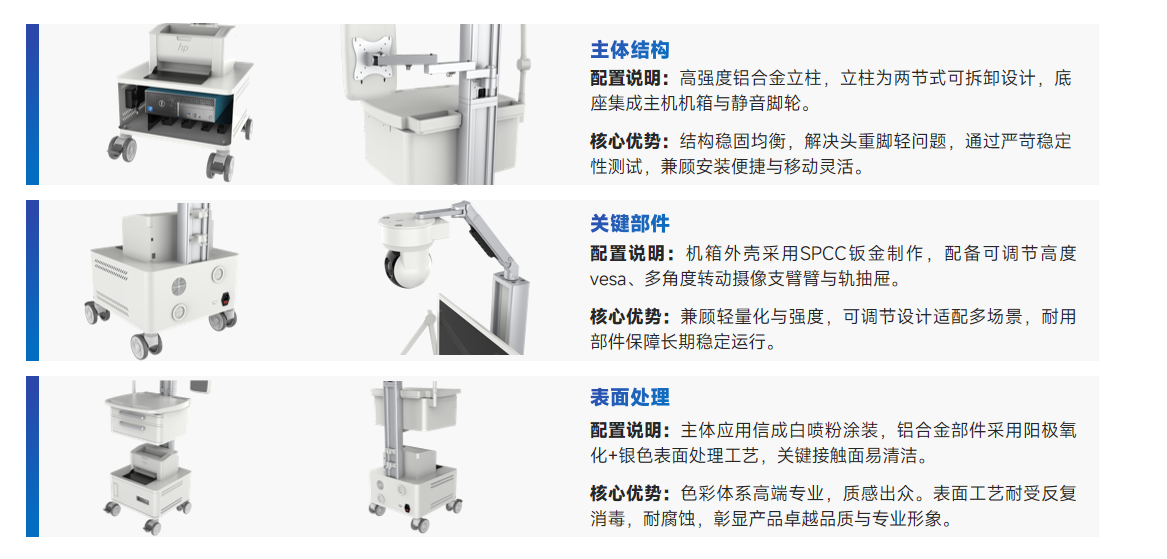
Integrated Enclosure Design
The EEG host is integrated directly into the lower enclosure, creating a cleaner appearance, reducing external components, and significantly improving space utilization.
Compared with conventional cart configurations, overall workspace efficiency can improve by up to 40%.
Dedicated Cable Routing Architecture
Internal cable channels, cable organizers, hook-and-loop fastening systems, and reserved expansion interfaces help maintain a clean and organized workstation.
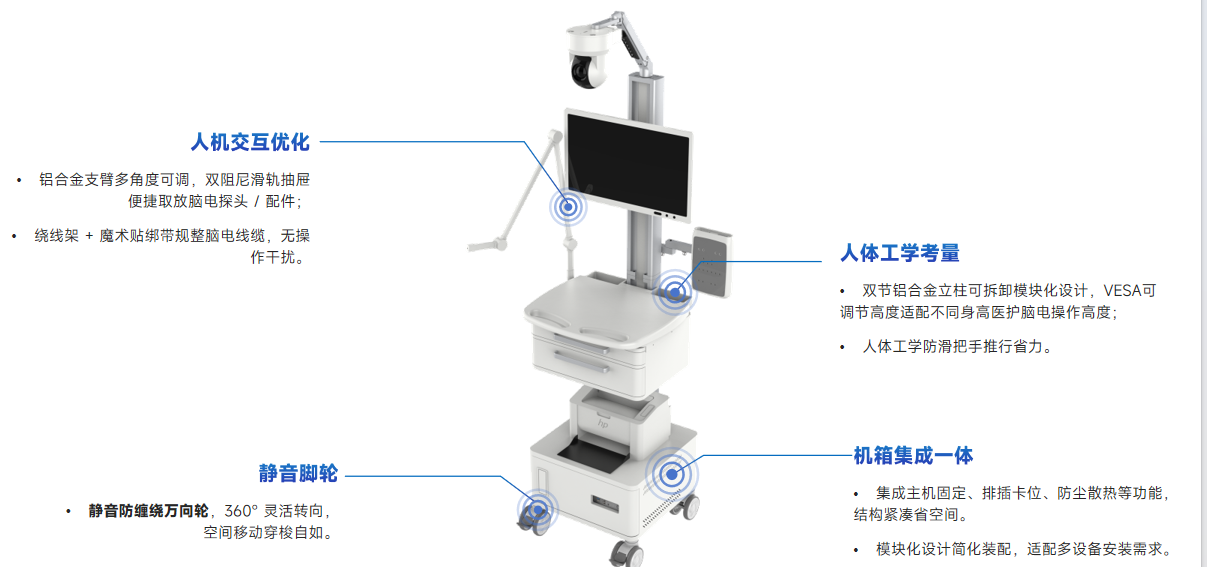
Enhanced Ergonomic Experience
Adjustable VESA monitor mounting, flexible display positioning, accessory storage drawers, and optimized workstation layout support efficient daily operation for clinicians.
Stable Long-Term Operation
Anti-interference design, secure host fixation, dedicated interface management, and optimized ventilation contribute to reliable system performance during prolonged use.
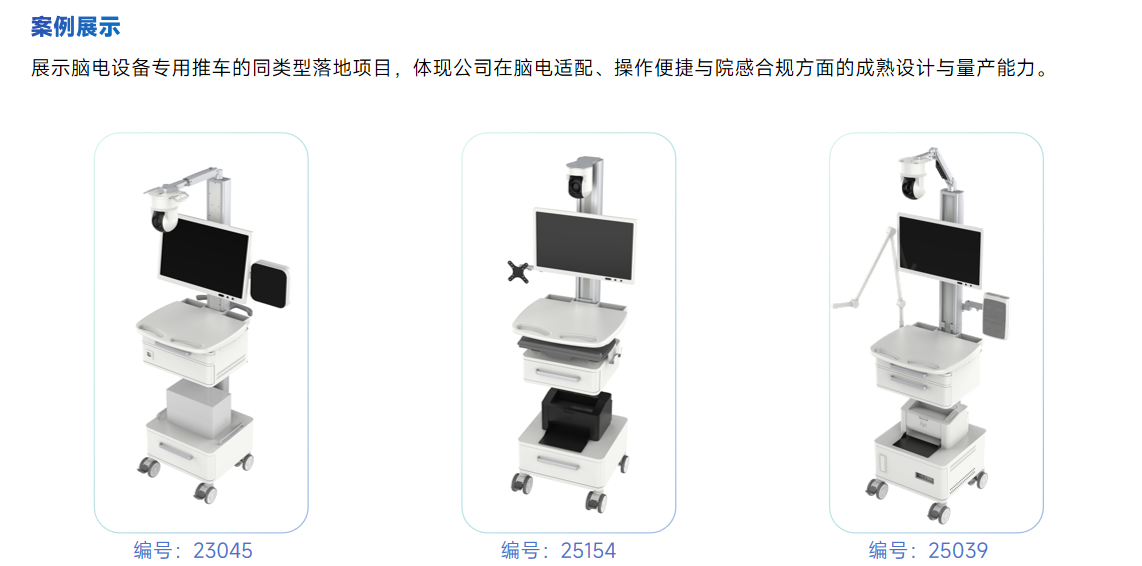
Designed for Modern Healthcare Environments
Constructed from high-strength aluminum, SPCC steel, medical-grade powder coating, and anodized finishes, the workstation delivers both durability and a professional appearance.
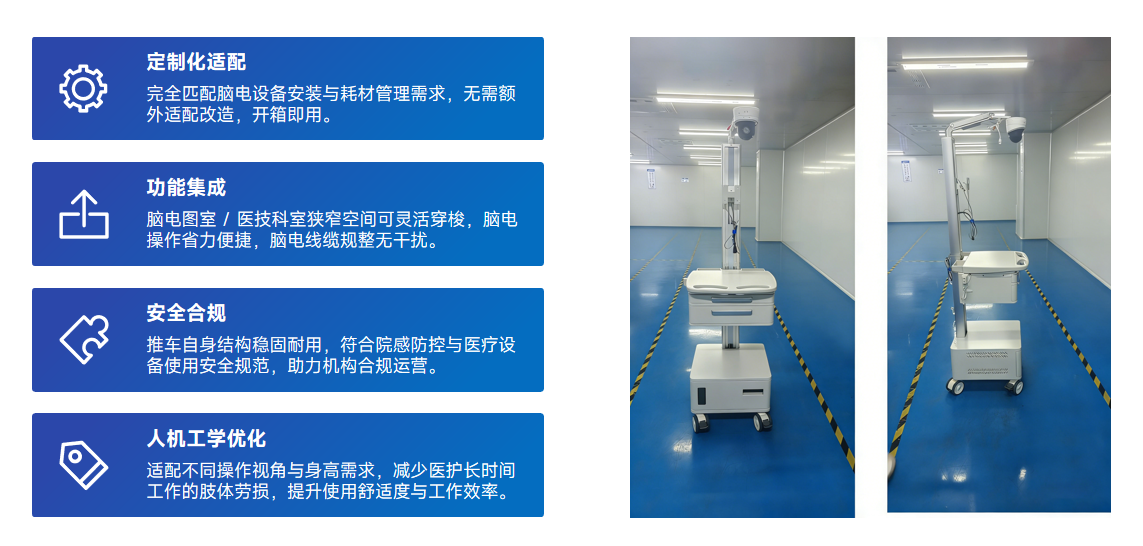
More Than a Cart
For EEG applications, the cart is not merely an accessory. It is an integral part of the diagnostic workflow.
A properly designed EEG workstation should optimize workflow, improve space utilization, simplify cable management, support long-term reliability, and enhance the clinical environment.
As EEG technology continues to evolve toward greater mobility and digital integration, purpose-built workstation solutions will play an increasingly important role in healthcare delivery.
About Vision MedTech
Vision MedTech provides OEM/ODM manufacturing solutions for medical carts, ergonomic monitor arms, equipment enclosures, and integrated healthcare workstations.
Medical Carts · Ergonomic Arms · Device Enclosures · OEM/ODM Manufacturing
Submit a request
Your name*
Mail*
Company Name*
phone
message*
File/Image Upload
Note:Up to 6 files, each within 10MVerification code